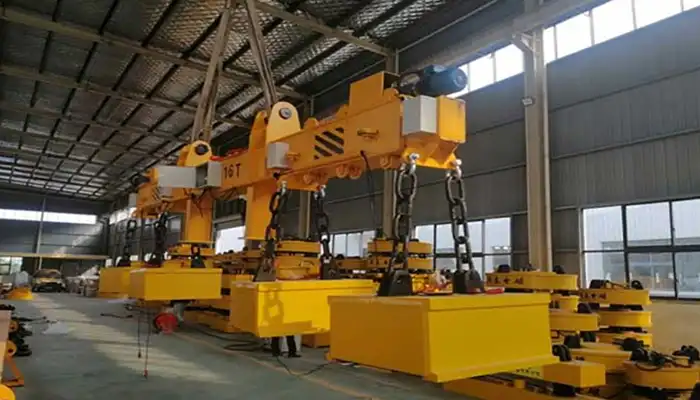
Smarter Spreader Design for Electromagnetic Overhead Cranes
menu_open
Content Quick Link
Adjustable spreaders and multi-point lifting on electromagnetic overhead cranes dramatically reduce material damage, improve operational efficiency, and provide crane buyers with flexibility for handling diverse steel and metal loads safely.
Key Takeaways
- Adjustable spreader design ensures safe handling of materials of varying lengths, widths, and weights.
- Multi-point lifting distributes magnetic force evenly, preventing bending, warping, or surface damage.
- Smarter spreader systems increase handling speed and reduce operational downtime.
- Flexibility in spreader adjustment allows one crane to manage multiple load types, from steel plates and slabs to long beams.
- Enhanced safety features, such as overload protection and anti-slip surfaces, protect both materials and operators.
- Upgrading to intelligent spreader systems boosts long-term ROI by reducing maintenance costs and material rejection rates.
Questions Answered in This Guide:
- How can electromagnetic overhead cranes prevent material damage during lifting?
- What is the role of adjustable spreaders in safe material handling?
- Why is multi-point lifting important for steel plates, slabs, and long beams?
- How do smarter spreader designs impact efficiency and operational costs?
- What should crane buyers consider when selecting an overhead crane with an adjustable spreader?
Introduction: Why Spreader Design Matters
Electromagnetic overhead cranes are essential in modern steel mills and workshops. They lift heavy steel plates, slabs, and long profiles using magnetic force, making material handling faster and cleaner than chains or hooks.
Yet, even the strongest crane can cause damage if the spreader isn’t designed to match the load. A well-thought-out spreader protects materials, ensures smooth handling, and reduces downtime.
Key insight for buyers:
- A crane’s lifting capacity is only part of the equation. The spreader design is equally critical.
- Adjustable and multi-point spreaders help balance loads, prevent damage, and improve operational efficiency.
Intended audience:
- Crane buyers seeking reliable overhead crane solutions.
- Workshop managers aiming to protect materials and maintain smooth production.
- Material handling specialists evaluating equipment for steel or ferrous products.
The Hidden Risks of Fixed Spreaders
Fixed spreaders are simple and cost-effective, but they come with hidden limitations that can affect efficiency, material quality, equipment life, and safety.
Limited Flexibility
One size does not fit all.
- Only works for standard load dimensions.
- Wider plates, longer beams, or irregular bundles require manual adjustments or alternative lifting methods.
- Every workaround slows operations and reduces efficiency.
Material Damage
Uneven lifting points hurt the material.
- Lifting from fixed points can bend, warp, or scratch steel surfaces.
- Sensitive steel grades are especially vulnerable.
- Damaged materials may lead to rework or rejection, increasing costs.
Operational Inefficiency
Extra handling steps cost time.
- Manual repositioning or securing loads adds minutes to each cycle.
- Over time, these delays reduce overall workshop productivity.
Equipment Strain
Uneven loads stress the crane.
- Wheels, girders, and hoists take more force than intended.
- This accelerates wear, increases maintenance frequency, and shortens equipment lifespan.
Safety Concerns
Imbalance creates risk.
- Uneven lifting points increase chances of accidents.
- Dropped loads can injure operators or damage surrounding equipment.
Bottom Line
Fixed spreaders may seem simple and low-cost, but they often slow operations, increase maintenance, and put both materials and personnel at risk. Buyers and workshop managers must consider these limitations when selecting a lifting system.
Smarter Spreader Design: Key Features
Modern spreader designs help cranes lift steel plates, slabs, and beams safely and efficiently, reducing damage and improving workflow.
Adjustable Spreaders
Telescopic or sliding arms allow the spreader to fit exactly to varying load sizes.
- Accommodates steel plates, slabs, beams, and irregular shapes.
- Reduces stress points, preventing bending or surface scratches.
- Eliminates the need for additional lifting tools or manual adjustments.
Multi-Point Lifting
Spreads lifting force across multiple points for stability and safety.
- Balances heavy or long materials to prevent warping.
- Ideal for bundles, oversized steel slabs, or long beams.
- Minimizes the risk of accidental drops and operator error.
Integration with Crane Controls
Connected control systems enable precise operation and real-time monitoring.
- Operators can position loads accurately.
- Real-time load monitoring ensures even weight distribution.
- Reduces human error and prevents unsafe lifting conditions.
Built-In Safety Features
Smarter spreaders include features that protect operators and materials during lifts.
- Overload sensors alert before exceeding safe limits.
- Secure attachment points prevent slippage during movement.
- Anti-slip surfaces stabilize materials during lifts.
- Ergonomic designs reduce operator fatigue and mistakes.
Why It Matters for Buyers
Smarter spreader designs directly impact operational efficiency, material protection, and long-term cost savings. Investing in adjustable, multi-point, and safety-enhanced spreaders ensures reliable crane performance across diverse loads and workshop conditions.
Practical Applications of Smarter Spreaders
Adjustable and multi-point spreaders deliver real benefits in material handling, particularly for electromagnetic overhead cranes in steel mills and fabrication workshops.
smart electromagnetic overhead cranes
Steel Plates, Slabs, and Hot-Rolled Materials
Adjustable, multi-point spreaders ensure lifting points align properly, distributing force evenly and protecting the material.
- Large steel plates and slabs in production lines.
- Hot-rolled materials that require careful handling to prevent surface damage.
- Handling multiple plate sizes without needing separate cranes or lifting tools.
Long Beams, Profiles, and Structural Steel
Smarter spreaders allow operators to adjust arms to match the beam length and use multiple lifting points for balance.
- Long steel beams used in construction or fabrication.
- Structural profiles that require precise alignment during lifting and placement.
- Heavy steel sections that need stable transport between workstations.
Bundled or Irregular Loads
Adjustable and flexible spreaders adapt to bundle size, providing stable lifting without manual adjustments or extra handling tools.
- Steel bundles of different lengths or thicknesses.
- Irregularly shaped metal components or assemblies.
- Loads that change frequently, requiring a versatile crane solution.
Why It Matters for Crane Buyers
Choosing an electromagnetic crane with a smarter spreader system ensures one crane can safely handle a wide variety of materials. It reduces downtime, protects high-value steel products, and improves overall workshop efficiency, making it a practical investment for buyers focused on safety and productivity.
Benefits of Smarter Spreader Systems for Crane Buyers
Investing in adjustable, multi-point spreaders for electromagnetic overhead cranes improves material handling, workflow efficiency, and long-term costs.
Reduced Risk of Material Damage and Deformation
A well-designed spreader aligns lifting points correctly and distributes magnetic force evenly, preventing bending, warping, and surface scratches.
- Materials maintain their original shape and surface finish.
- Lower chance of damage during transport or positioning.
- Safer handling of sensitive steel grades or irregular loads.
Increased Operational Efficiency and Faster Cycle Times
Adjustable and multi-point spreaders allow lifting of varied loads without changing tools or cranes, streamlining workflow and accelerating production cycles.
- Faster lifting and positioning of materials.
- Reduced manual handling and adjustments.
- Improved overall throughput in workshops and steel mills.
Greater Flexibility: One Crane Handles Multiple Load Types
One crane with a smarter spreader can handle different sizes, weights, and shapes, reducing the need for multiple cranes and saving space and investment costs.
- One crane can move plates, beams, slabs, and bundles.
- Quick adjustments for varying load dimensions.
- Adaptable for future production changes or expansions.
Lower Long-Term Costs: Fewer Damaged Materials and Reduced Maintenance
Even load distribution prevents material damage and reduces wear on the crane, lowering maintenance costs and extending equipment lifespan.
- Fewer repairs to crane wheels, girders, or hoists.
- Reduced downtime and unplanned maintenance.
- Overall savings on materials, equipment, and operational expenses.
Buyer Considerations When Choosing Smarter Spreaders
Selecting the right spreader requires balancing operational needs, safety, and long-term costs. Key factors are outlined below for informed decision-making.
Load Capacity and Maximum Spreader Weight
Verify that the spreader can safely handle your heaviest materials. Exceeding the weight limit can harm both the crane and the material.
- Maximum lifting weight the spreader is rated for.
- Weight distribution across multiple lifting points.
- Compatibility with your heaviest expected loads.
Compatibility with Existing Overhead Crane Systems
Ensuring spreader-crane compatibility avoids costly retrofits and operational issues.
- Mounting connections and trolley compatibility.
- Integration with existing crane hoists and rails.
- Space requirements for adjustable arms and multi-point lifting.
Ease of Adjustment and Automation Options
Easy-to-adjust spreaders save time and reduce operator fatigue, while automation improves efficiency for repetitive lifts.
- Manual vs. automated adjustment mechanisms.
- Speed and simplicity of telescopic or sliding arms.
- Integration with crane control systems for precise positioning.
Safety Standards and Certifications
Certified spreaders ensure safety for materials and operators while meeting regulatory requirements.
- Compliance with local and international crane safety standards (e.g., ISO, CE).
- Built-in features like overload sensors, secure attachments, and anti-slip surfaces.
- Documentation and testing records from the manufacturer.
ROI Evaluation: Efficiency Gains vs. Investment Cost
Smarter spreaders may cost more upfront, but long-term savings and efficiency gains often justify the investment.
- Reduction in material damage and rework costs.
- Faster handling and increased production throughput.
- Lower maintenance requirements and longer equipment lifespan.
Conclusion
Investing in a smarter spreader design for electromagnetic overhead cranes is more than just a technical upgrade—it’s a practical decision that directly impacts material handling, safety, and overall efficiency. Adjustable arms and multi-point lifting ensure that every load, whether a steel plate, beam, or bundle, is lifted evenly and safely, reducing the risk of damage or deformation.
For crane buyers, prioritizing flexible and well-designed spreader systems brings clear benefits:
- Protects high-value materials from scratches, bending, or warping.
- Increases operational efficiency and speeds up handling cycles.
- Reduces equipment wear and long-term maintenance costs.
- Provides flexibility to handle different load types without needing multiple cranes.

Article by Bella ,who has been in the hoist and crane field since 2016. Bella provides overhead crane & gantry crane consultation services for clients who need a customized overhead travelling crane solution.Contact her to get free consultation.